Color palette
Choose a dominant neutral, supporting colors and a few accents.
Interior Mood Board
Bring your colors, materials and furniture ideas together. Start with a description or a room photo and explore a coordinated design direction.
Explore before signing in. Sign-in and credits are required to generate.
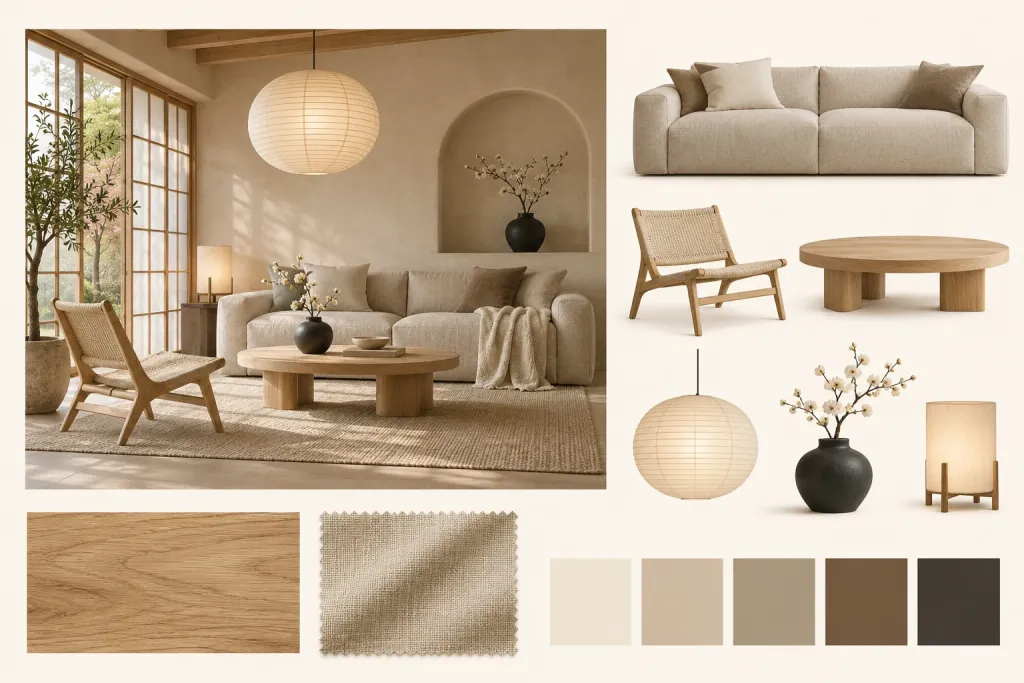
Explore six design directions. Use a prompt to start your own board; these illustrations are not editable templates.
Living room, Japandi. Pale oak, cream linen, paper lighting and small black accents.
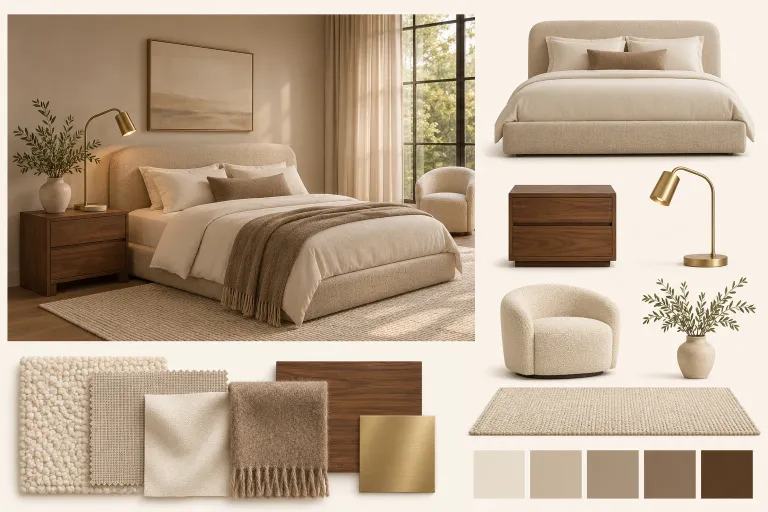
Bedroom, Warm minimalist. Oatmeal upholstery, walnut, soft bedding and brushed brass.
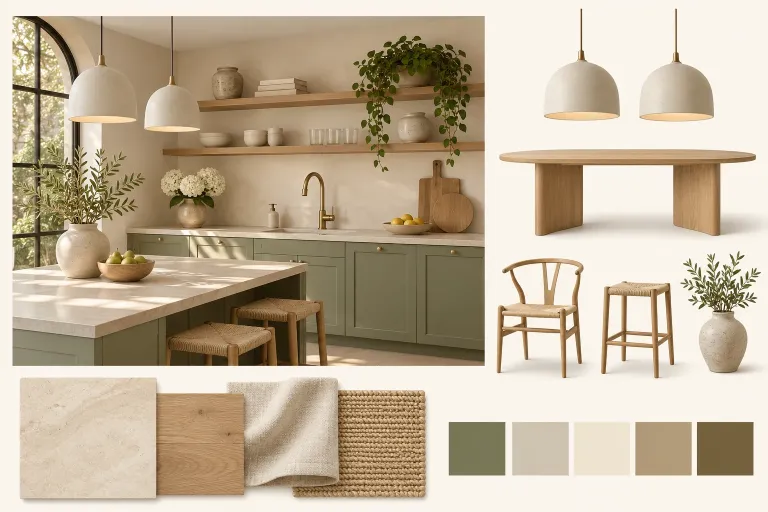
Kitchen, Modern organic. Sage cabinets, oak shelves, limestone and ceramic pendants.
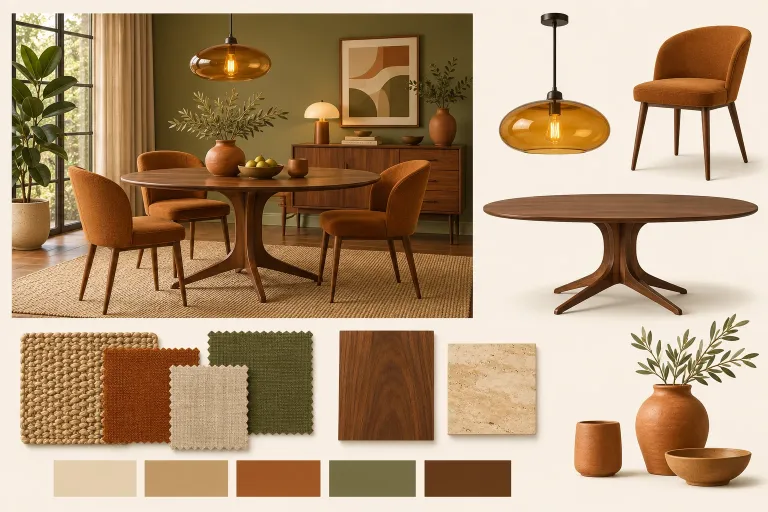
Dining room, Mid-century. Walnut, cognac chairs, amber glass and terracotta.
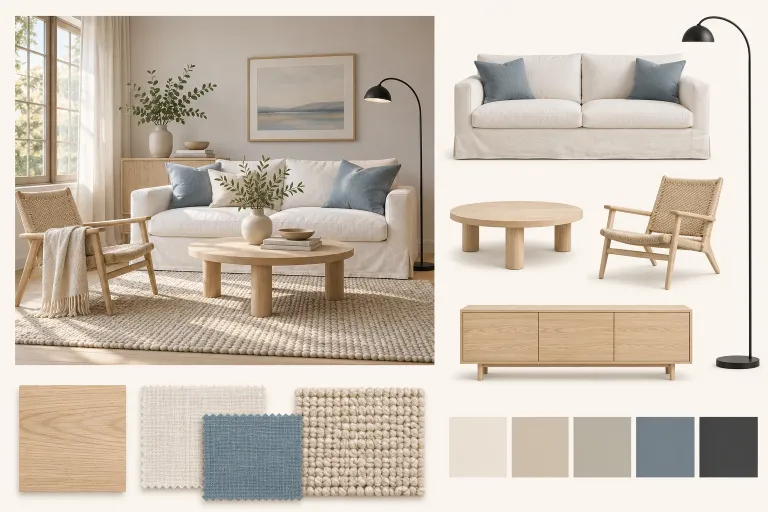
Living room, Scandinavian. Light ash, white linen, dusty blue cushions and wool.
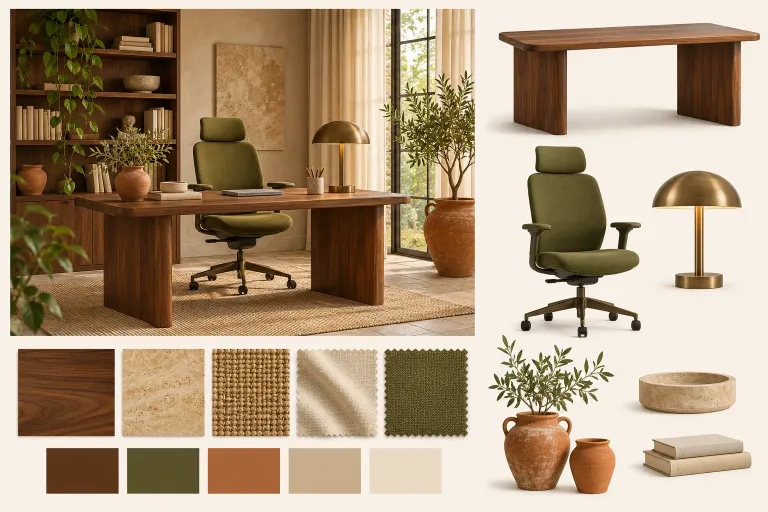
Home office, Earthy. Walnut desk, olive seating, terracotta and warm stone.
Upload a room photo and use its visible colors, finishes and furniture character as inspiration. Add a brief to guide the result toward your preferred style.
The result is one mood board image. Furniture references are illustrative, not identified products, separate editable elements or a 3D model.
Create a mood boardA mood board brings visual references together to communicate a design direction before choosing products or planning the room.
Choose a dominant neutral, supporting colors and a few accents.
Compare wood, stone, fabric and finish references together.
Explore silhouettes and proportions before choosing actual products.
Use a room vignette to communicate the overall feeling.
Describe your room or upload a JPG, PNG or WebP photo.
Select the room and style, check the credit cost, then sign in to generate.
Compare the generated concepts. Change your brief to generate again or download a completed image.
Bring your colors, materials and furniture ideas together. Start with a description or a room photo and explore a coordinated design direction.
Create a mood board